

How To Clean Corrosion From A Relay In A Fuse Box
Regardless as to whether you adopt planes and trains, or boats and automobiles, nosotros all rely upon modes of transportation to become from one place to another.
Despite their differences, all four of these forms of transit are susceptible to corrosion and rust, and yes, in that location is a divergence between these cancerous occurrences.
Over the years, we've covered everything from undercarriage rust removal and protection tips, to discussing the side-effects of route salt and de-icing sprays. Merely for whatever reason we have all the same to tackle the topic of aluminum pitting and corrosion… until now.
In the following sub-sections, we volition cover the common causes of aluminum pitting and corrosion, as well equally a few of our favorite removal and preventative maintenance tips. In club to go along aluminum looking and performing at its best, you have to start somewhere, and a good place to begin is with the right data.
Photo Credit: Micah Wright
Wait… Isn't Aluminum Supposed to Never Rust?
Balancing forcefulness and lightweight rigidity with rust resistance and ductility, aluminum alloys are modern man's space-historic period material.
Today, you tin can notice aluminum in almost every aspect of daily human being life. From automobiles, airplanes, farming equipment, roofing materials, set on weapons, and elevators, to electronics, hardware, appliances, and that can of craft beer y'all're sipping… aluminum's applications are endless.
One of the main reasons for its popularity, is that aluminum does not contain iron, and therefore will never rust. Instead, aluminum is susceptible to something called "corrosion," which if allowed to fester, can too be quite detrimental.
As aluminum corrodes, it forms lesions on its surface and slowly begins to weaken, much similar how a rust-riddled piece of iron slowly becomes brittle over time. While both of these cancers consume metal at a snail's pace, they are a purple pain in the ass to remove, and can exist a challenge to quarantine if allowed to embed in a surface.
Quick Nerd Note: According to a report by Monroe Engineering, aluminum accounts for about 8% of all elements in the Earth'due south chaff, making it the most readily available metal. Aluminum is also super lightweight, which from a manufacturing standpoint, makes information technology incredibly easy to transport and dispense.
Anodes are Good, Corrosion is Bad... Aluminium Gunkhole 101 Chuffed Special
So if aluminum won't rust, why does it corrode?
For the reply to this puzzling question, we turn toward none other than Minnesota-based bolt and hardware specialist, Fastenal, who provides us with the following caption.
"Corrosion tin be thought of every bit an electro-chemical activeness in which 1 metallic is changed into a chemical or merely eaten abroad. When 2 metals are in contact with each other in the presence of some electrolyte [h2o], the less agile metal will human activity as the cathode and attract electrons from the anode. The anode is the material which corrodes."
-Fastenal
While this nerd jargon will more than likely trigger nods of affirmation from all of the science buffs who are reading this article, those of us who snoozed through chemistry form volition probable require an abbreviated version.
In layman'south terms, aluminum pitting and corrosion begins when surface flaws let contaminants and moisture to creep into crevices. Like many other materials, aluminum is only as potent equally its weakest link, so when pitting forms in a item area, it will eventually spread both outward and inward if non neutralized and/or removed.
Quick Nerd Note: Aluminum alloys naturally form a smooth layer of surface oxidation measuring anywhere from 0.001 to 0.0025 of an inch in thickness. This oxidized outer layer is not detrimental to the alloy, as information technology forms a shell-like barrier that prevents pitting from forming.
Photo Credit: Micah Wright
Is at that place a way to prevent aluminum from pitting and corroding?
Fortunately, in that location are several ways of protecting an aluminum surface from the amercement associated with pitting and corrosion.
On of the more than common methods of protecting aluminum is the use of clear blanket, where a protective layer is pre-installed at the mill. While these materials and techniques may vary from the clear coat adorning your automobile, both products ultimately serve the same purpose.
Unfortunately, manufacturing plant clear coatings are not a permanent solution, and over time they can become prone to premature failure.
1 of the reasons for this, is that many aluminum components feel routine levels of corruption amid wet-rich environments. This is precisely why a vast bulk of today's aluminum products come finished in an anodized coating.
The Pros and Cons of Anodized Aluminum
While a cursory paper on the subject of anodization by TECH-FAQ certainly shines some light on anodized aluminum's pros and cons, our nerdy asses decided to dig a bit deeper.
Eventually, we stumbled upon a newspaper published by commercial-course blend coating specialist, Silcotek. In its findings, Silcotek not simply discuses the causes of aluminum pitting and corrosion, only delves into the reasoning behind the need for anodization.
According to scientists well-versed in the subject, anodization drastically changes the texture of an aluminum alloy, giving it a far more porous surface, which in turn allows subsequent protective and/or pigmented coatings to adhere to the metal. Not only does anodization prevent cracking and peeling, merely its oxide layer remains completely undetectable by the naked eye.
"The well-nigh practical and constructive ways of protecting against corrosion involves finishing surfaces with an appropriate protective blanket. For aluminum alloys, the coating system commonly consists of a surface to which a corrosion-inhibiting primer is practical. In contempo years it has become common do not to seal the anodized layer. Although this reduces the corrosion resistance of the anodized layer, the primer adheres better to the unsealed surface. As a result, it is less probable to chip off during manufacture and service, producing improved system performance. "
--boeing
But anodizing besides has its weaknesses, with its very conception being its biggest enemy.
Unlike titanium, iron, and stainless steel, aluminum becomes drastically weakened once temps surpass the 212° Fahrenheit (100° Celsius) mark, a cadre role in the anodization process. And while anodized aluminum's porous surface may make it easier to coat, and therefore more resistant to flaking and corrosion, information technology falters when the heat is on, with a surprisingly low 176° Fahrenheit (80° Celsius) cracking point.
Quick Nerd Note: In its simplest form, the deed of anodizing is lilliputian more than than the exposure of raw aluminum alloy materials to a torturous blend of acrid solutions and tearing electric currents. This killer combo forces the aluminum to form hydrogen at its negative electrode (cathode), with oxygen along its physical aluminum surface serving every bit the positive electrode (anode). While the hydrogen is little more than an aluminum by-product, the oxygen produced is transformed into an aluminum oxide, which in essence, is the basis for anodization.
Don't Stress, and Keep Clean
Another mutual risk to aluminum is a fairly self explanatory term chosen "stress corrosion slap-up," or SCC for brusque.
While this form of failure tin can be found in many metals, aluminum's downfall is that it tends to corrode quite speedily when foreign elements are combined with abundant amounts of estrus and stress. Simply put, if information technology's aluminum and it gets dirty, and then gets bludgeoned repeatedly past another object or a pressing force, chances are it will somewhen succumb to SCC.
"Pit initiation on multiphase commercial [aluminum] alloys occurs invariably at weak spots on the oxide around the intermetallic particles. The weakness results firstly from the presence of a flaw in the oxide at the particle-matrix interface."
--Norwegian scientist, Kemal Nişancıoğlu
Things like aluminum gunkhole hulls, stamped truck beds, aircraft exteriors, and construction and agriculture equipment are all prone to stress corrosion cracking. This is why routine surface cleaning and inspections on shipping and watercraft are and so crucial, for if left unattended for too long, the structural integrity of a corroded department could return the entire craft unfit for use.
In club to cleanse aluminum surfaces that take been afflicted with "metal cancer," most people will either take either one of two approaches. The offset, and perchance most appealing, is a highly acidic, easy-to-make, super affordable, all-natural aluminum oxidation remover of unrestrained awesomeness. While the other favors a far more than hardcore course of assault…
The All Natural Aluminum Cleaning Approach
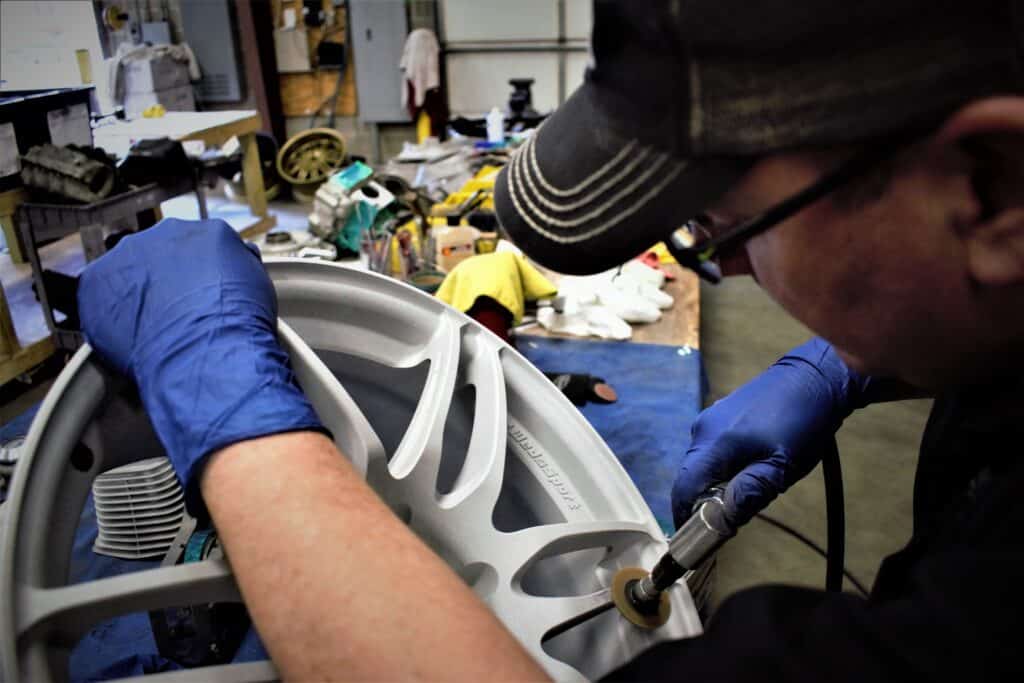
By combining distilled water with either pure lemon juice or white vinegar, and then gently agitating the corroded area with a mild scrubbing pad, most balmy cases of aluminum corrosion can be removed.
To create this magical elixir, but combine a quart of distilled water with two tablespoons of the acidic liquid of your choosing, and stir. With a little bit of elbow grease, ample amounts of exposure time, and a dash of luck, yous should exist able to remove most garden variety forms of aluminum corrosion.
The Hardcore Chemic Aluminum Scouring Alternative
Still, if you lot feel like something stronger is required, there's a seemingly countless array of aluminum cleaning chemical products on the marketplace, all specifically engineered for the removal of oxidation on untreated and anodized automotive surfaces.
And while things like not-woven abrasive pads work wonders on corroded anodized aluminum, one must be careful to not damage the metal'due south protective film. However, if the anodization does get compromised in some way, a splash of chromic acid or another inhibitive treatment can be used to restore the oxide film.
Quick Tip: NEVER use steel wool, stiff wire brushes, or any other highly abrasive cleaning media on aluminum surfaces. Aluminum is a soft metal, and the last matter you want is to encounter farther pitting and corrosion develop due to devil-may-care actions.
How to Protect Aluminum From Corrosion
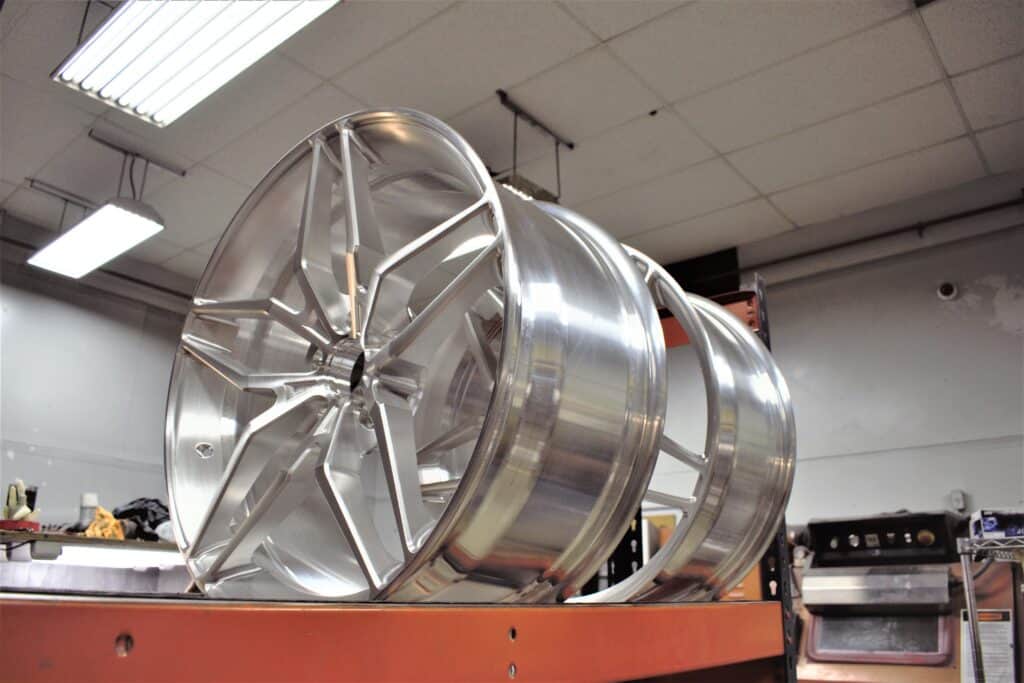
One way to protect an aluminum surface from corrosion is to store it in a wet-free, climate-controlled surroundings. While this may be ideal for something small that is only used occasionally, preventing an unabridged automobile from coming into contact with pelting, humidity, or whatsoever other moisture-rich natural element is virtually impossible.
This causes us to circle back to the most widely practiced form of aluminum protection: Clear blanket.
While a basic, "rattle can approach" to clear coating can be utilized on smaller aluminum objects, larger surface areas typically crave a more potent solution. Withal, applying a layer of clear coat protection doesn't always hateful spraying invisible paint everywhere.
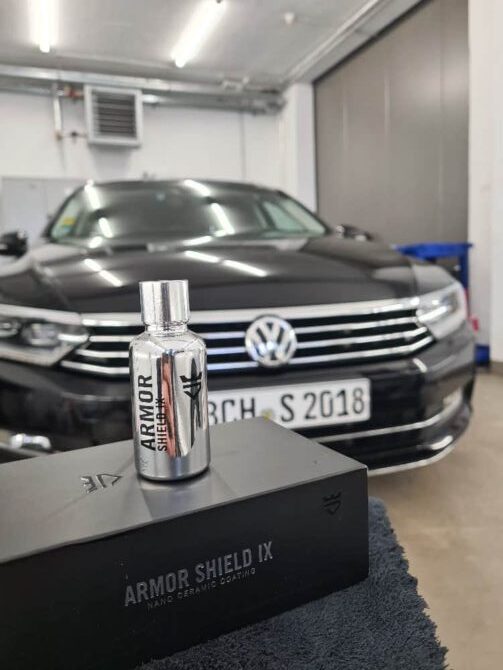
Clear coating an aluminum surface can too mean applying a layer of ceramic coating. Modern nano ceramic coatings non only protect aluminum alloy from the elements, but they also add depth to painted, powder coated, and anodized surfaces.
Parting Shots
Hopefully this helps explain why thousands of people apply a simple coating of Armor Shield IX as a class of protecting their aluminum possessions.
From automotive components and body panels, to boats, bicycles, motorcycles, and more, protecting an aluminum surface has never been easier nor more than resilient thanks to the advent of nano ceramic coatings. Then requite it shot and keep the aluminum in your life from pitting and corroding. Ceramic coating is way easier than you might think…
If yous enjoyed this commodity, so you'll dearest AvalonKing'south automotive care products for Do-It-Yourselfers. We create "No B.S. products" for an affordable price. And the best part, we treat our customers like family, and then if you have any questions or just looking to conversation near cars, nosotros're only an electronic mail or phone call away. Cheque out our homepage hither.

Source: https://avalonking.com/blog/into-the-pit-how-to-remove-and-prevent-aluminum-corrosion/
Posted by: bradleyroutionce.blogspot.com
0 Response to "How To Clean Corrosion From A Relay In A Fuse Box"
Post a Comment